
_edited.png)
4-7 years Hurling
GAA hurling for 4–7-year-olds is an introduction to Ireland’s national game delivered in a fun, safe and inclusive environment. At this stage, often run through nursery or Go Games programmes within the Gaelic Athletic Association, the focus is not on competition but on developing fundamental movement skills such as running, catching, striking and balance. Children are introduced to basic hurling skills using age-appropriate equipment and small-sided games, helping them build confidence, coordination and a love for the game while learning to be part of a team in their local club.

4-7 years Hurling

Bas
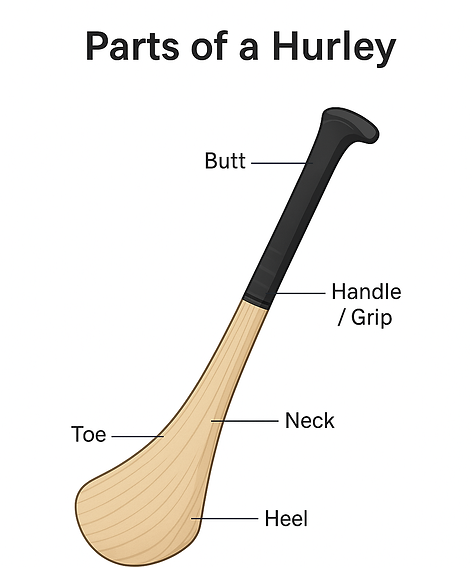
Butt
The very top end of the hurley. It provides a secure stopping point for the player’s top hand and helps with grip and control during striking, catching, and lifting.
Handle / Grip
The long upper section of the hurley where the player holds it. It is usually wrapped with a rubber or synthetic grip for comfort and better control. This part gives leverage for swinging and striking.
Neck
The narrower section between the bas and the handle. It must be strong and flexible, as it absorbs much of the shock from striking the sliotar. A well-shaped neck improves balance and feel.
Toe
The pointed or rounded end of the bas. It is commonly used when striking on the run, flicking the ball, or lifting the sliotar from the ground.
Heel
The inside lower corner of the bas. It provides stability to the bas and is used in ground hurling, blocking, and angled strikes.

First Touch
Sliotar
is the ball used in the Gaelic games of hurling and camogie. It is similar in size to a tennis ball .

Smart Touch : Go Games

Quick Touch : U10s U11s

Size 4 Match Sliotar

How to Measure for a Hurley
-
Stand up straight with your arms relaxed by your side.
-
Place the hurley beside you, with the heel resting on the ground.
-
The correct length is when the top of the hurley reaches your wrist (the point where your hand meets your arm).
-
If it reaches above the wrist, it’s too long.
-
If it’s below the wrist, it’s too short.
This wrist-height method is the standard and most reliable way to choose the right hurley size.
Height Reference Table (this is a guide):
Player Height Hurley Length
Up to 4’11” (150 cm) 24–26 inches
5’0”–5’3” (152–160 cm) 26–28 inches
5’4”–5’7” (162–170 cm) 28–30 inches
5’8”–5’11” (172–180 cm) 30–34 inches
6’0”+ (183 cm+) 34–36 inches
Grip / Handle – Standard hurley grips fit most hands, but you can wrap the handle for better control. Measure your hand span if you want a custom grip thickness.
How to hold a Hurley
-
Top hand (dominant) near the top of the handle — guides and controls the hurley.
-
Bottom hand (non-dominant) lower on the handle near the bas — gives power.
-
Hands shoulder-width apart, relaxed but firm grip..

-
Stance: knees slightly bent, weight balanced, elbows slightly bent.
-
Swing using arms and shoulders, not just wrists, hitting the sliotar with the flat Heel
4-7 years Hurling

Coach Season Planner
Sample


© 2026 The Duhallow Juvenile Clubs GAA Coaching Website & App. All rights reserved.
Coach Season Planner
Printable Template


TAP TO
OPEN
© 2026 The Duhallow Juvenile Clubs GAA Coaching Website & App. All rights reserved.
Coach Session Planner
Sample


© 2026 The Duhallow Juvenile Clubs GAA Coaching Website & App. All rights reserved.
Coach Session Planner
Printable Template

TAP TO
OPEN

© 2026 The Duhallow Juvenile Clubs GAA Coaching Website & App. All rights reserved.
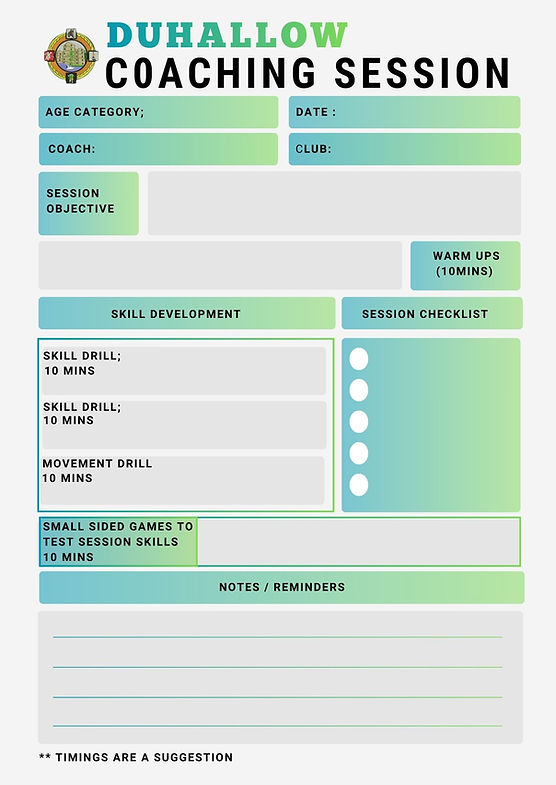
Coach Session Planner
Sample
Coach Session Planner
Sample 2
Coach Session Planner
Printable Template
© 2026 The Duhallow Juvenile Clubs GAA Coaching Website & App. All rights reserved.


© 2026 The Duhallow Juvenile Clubs GAA Coaching Website & App. All rights reserved.

TAP TO
OPEN

© 2026 The Duhallow Juvenile Clubs GAA Coaching Website & App. All rights reserved.
Hurling Skills
Assessment 4-7 years
-
In line with GDPR guidelines, no player names are recorded during skills activities.
-
Children are referred to by numbers or codes only, and any observations are for coach/teacher use only.
-
GAA skills testing for 4–7 year olds is very minimal and focuses mainly on fun and enjoyment.
-
Activities are play-based, informal, and designed to keep children active and smiling.
-
The emphasis is on exploring basic movements rather than formally testing performance.
-
Key skills include simple running, jumping, throwing, catching, kicking, and striking.
-
There is no pressure, scoring, or comparison between children.
-
The aim is to build confidence and a positive first experience of Gaelic games.
-
All children are included and encouraged to learn through games and playful activities.

TAP TO
OPEN


-
Coaching Tip: Focus on effort and engagement over outcomes. At this age, confidence, coordination, and enjoyment are just as important as technical skill. Observe how children move, try new skills, and interact with others — these small moments often tell you more than any formal assessment.


-
Coaching Tip: With 4–7 year olds, keep it fun and relaxed. There’s no need to label activities as “skill testing.” Instead, use enjoyable games and drills as opportunities to make your own observations and gently track development.


GAA hurling rules are adapted across different age groups to make the game safe, enjoyable, and developmentally appropriate for all players. Younger children start with simplified rules, lighter equipment, and small-sided games to help them build confidence and master the basic skills. As players get older, the rules gradually introduce more advanced techniques, increased physicality, and full-sized play. This progression ensures that every child learns the game at the right pace while staying engaged, supported, and excited about hurling.
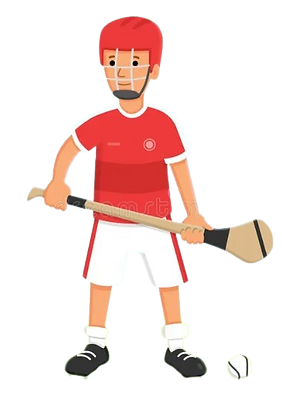
GAA Hurling Rules for 4–7 Years (FUNdamentals & Early Go Games)
🟢1. Game Format
-
Small-sided games: usually 3v3 / 4v4 / 5v5
-
Small pitch: approx. 20–40m
-
Two small goals or cones
Smaller numbers = more touches, more fun, more learning.
🟡 2. Match Duration
-
Short games: 6–10 minutes per half
-
Or several mini-games in a session
-
Plenty of rest breaks
🔵 3. Equipment
-
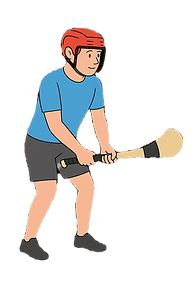
Hurleys sized to the child’s hip (safety + control)
-
First Touch sliotar (soft foam ball designed for beginners)
-
Helmet with faceguard required
-
No full-size goals necessary


🔴 4. Contact & Tackling
-
No physical tackling
-
No pulling, pushing, or shoulder-to-shoulder
-
Only shadowing the opponent
-
No striking or hooking attempts at this age
-
Child may block the ball with the hurley on the ground only.
🟣 5. Playing the Ball
Ground Hurling Only
At ages 4–7:
-
All play is on the ground
-
No lifting, no striking from the hand, no solos
-
Encourage:
-
Ground striking
-
Ground control (dribbling with hurley)
-
Ground blocking
-
Safe stopping of the ball
-
Hand Use
-
Players may catch the ball if it bounces up naturally
-
They may roll lift only from age 7 (optional depending on club)
🟤 6. Scoring
-
Keep scoring simple
-
Typically:
-
1 point per goal
-
Or no official score at all — fun first!
-
⚪ 7. Playing Time
-
All players get equal time
-
Rotate positions so every child learns all skills
🟠 8. Restarts
-
No complex frees — encourage play to continue
-
Side or end balls: roll or strike from the ground
-
No referees needed—coach guides play gently
🟩 9. Key Skills to Develop (4–7)
-
Swinging the hurley safely
-
Ground striking with both sides
-
Dribbling the sliotar along the ground
-
Balance, agility, footwork
-
Awareness of space and teammates
-
Learning to enjoy the game
⭐ 10. Coaching Focus
-
Keep sessions light, fun, and game-based
-
Use short, positive instructions
-
Build confidence more than perfection
-
Celebrate effort, teamwork, and trying new skills
GRIP READY
4-7 years Hurling


-
Top Hand: Near the end of the hurley
-
Bottom Hand: Positioned midway
-
Ready Position: Hurley in front, knees slightly bent, eyes on the sliotar
Key Points


Videos of Additional
Grip Ready Activities
Credit Naoise Hurling
Credit Naoise Hurling
Credit Learning GAA.ie
Hurling Grip Ready Checklist
✅ Technique
-
Top hand at end, bottom hand midway
-
Hurley in front, knees bent, eyes on sliotar
-
Controlled, smooth movements
✅ Skill Indicators
-
Holds hurley correctly
-
Maintains balance
-
Eyes on sliotar, ready to act
✅ If Struggling
-
Practice grip and stance separately
-
Start standing still, then combine
-
Encourage small, controlled movements

Credit Learning GAA.ie


4-7 years Hurling
LOCK & SWING
Key Points
-
Hands locked
-
Wide, balanced stance
-
Eyes on the ball
-
Low, smooth swing
-
Follow through


Videos of Additional
Lock & Swing Activities
Credit Tramore GAA.ie
Credit Tramore GAA.ie
Credit Learning GAA.ie
Hurling Lock & Swing
Checklist
✅ Technique
-
Hands locked together on the hurley
-
Shoulders turned sideways to the target
-
Smooth, controlled swing
✅ Skill Indicators
-
Maintains locked hands throughout swing
-
Swings with balance and good posture
-
Eyes on the sliotar during the action
✅ If Struggling
-
Practice locking hands first
-
Use slow-motion swings to build control
-
Break it into steps: lock → turn → swing

Credit Learning GAA.ie
4-7 years Hurling
GROUND STRIKE
-
Hands locked
-
Wide, balanced stance
-
Eyes on the ball
-
Low, smooth swing
-
Follow through
Key Points


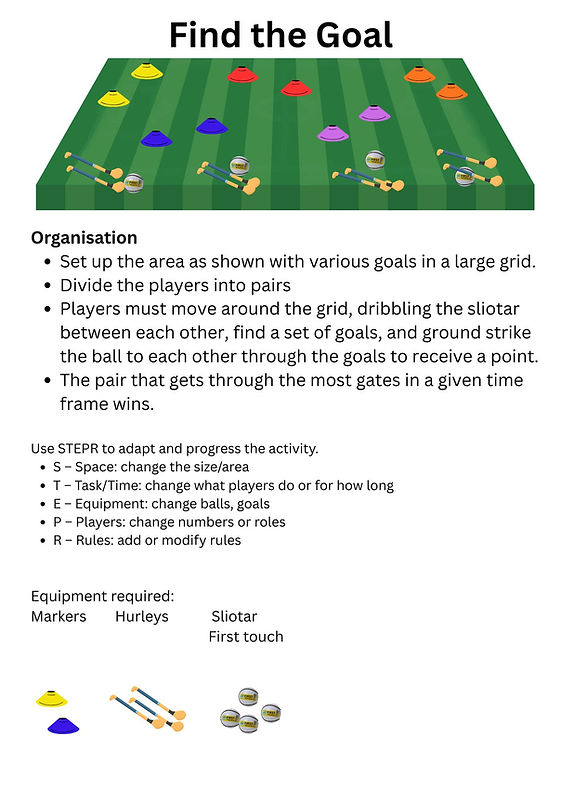
Videos of Additional
Ground Strike Activities
Credit CLG na Fianna
Credit CLG na Fianna


Hurling Ground Strike Checklist
✅ Technique
-
Hands locked with hurley held low
-
Eyes on the sliotar on the ground
-
Smooth swing through the ball
✅ Skill Indicators
-
Strikes with balance and control
-
Keeps eyes down until after contact
-
Hurley stays low throughout the swing
✅ If Struggling
-
Practice swinging without a ball first
-
Use a larger or softer ball for confidence
-
Break it into steps: stance → low hurley → swing

Credit Learning GAA.ie
Credit Learning GAA.ie
4-7 years Hurling
DRIBBLING
Key Points
-
Hands locked on the hurley
-
Keep the ball close and under control
-
Small, gentle touches
-
Eyes up when possible
-
Move at a steady pace


Videos of Additional
Dribbling Activities
CreditTramore GAA
Credit CLG na Fianna
Credit Learning GAA.ie
Credit Learning GAA.ie
Hurling Dribbling Checklist
✅ Technique
-
Hurley kept low and close to the ball
-
Small, gentle taps to keep the sliotar moving
-
Eyes on the ball, body balanced
✅ Skill Indicators
-
Keeps control of the sliotar while moving
-
Uses soft, consistent taps
-
Stays balanced and adjusts direction smoothly
✅ If Struggling
-
Start dribbling while standing still
-
Use very small taps at first
-
Set up short straight lines or cones for simple practice
4-7 years Hurling
GROUND STOP
-
Bend knees, get low
-
Hands locked on hurley
-
Angle the hurley to block the ball
-
Cushion the sliotar to stop it under control
Key Points


Videos of Additional
Ground Stop Activities
Credit Tramore GAA.ie
Credit CLG na Fianna
Hurling Ground Stop Checklist
✅ Technique
-
Hurley held low and flat to the ground
-
Eyes on the sliotar as it approaches
-
Use the hurley face to cushion and stop the ball
✅ Skill Indicators
-
Stops the sliotar cleanly without it bouncing away
-
Keeps the hurley steady and low
-
Maintains balance while stopping the ball
✅ If Struggling
-
Practice stopping a slowly rolled ball first
-
Use a larger or softer ball to build confidence
-
Remind them: “Hurley low, eyes on the ball”

Credit Learning GAA.ie
Credit Learning GAA.ie
RJT RUNNING- JUMPING - THROWING

OBSTACLE COURSE

4-7 years
Movement Skills
Key Points
-
Running
-
Jumping
-
Dodging/Changing direction
-
Balancing
-
Throwing & catching
-
Stopping and starting
-
Agility and coordination basics

ABC AGILITY - BALANCE- COORDINATION
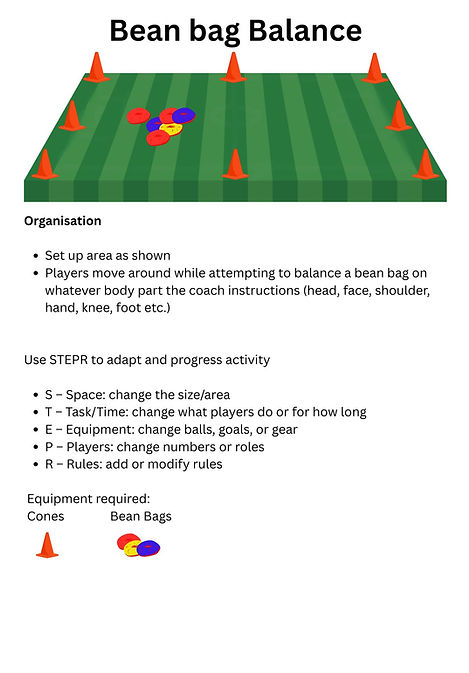
MULTI DIRECTIONAL RUNNING WITH HURL/ BALL

Videos of Additional
Movement Activities
Credit Fermoy GAA.ie
Credit LGFA
Credit Learning GAA.ie
Credit;Fitspiration
Movement Skills Checklist
✅ Technique
-
Uses short, controlled steps
-
Keeps knees soft for balance
-
Changes direction smoothly
-
Maintains good posture while moving
-
Looks up and scans the area
✅ Skill Indicators
-
Moves confidently in different directions
-
Stops and starts without losing balance
-
Shows coordination when running, turning, or dodging
-
Maintains control of their body while moving.
✅ If Struggling
-
Slow the movement pattern (walk → jog → run)
-
Use simple games like follow-the-leader or shadowing
-
Add visual cues: “Small steps,” “bend knees,” “eyes up”


