
_edited.png)


8-12yrs Learning from my Club
Phase 2
Welcome to our Gaelic games program, where fun meets fundamental skills! We focus on introducing basic movement skills through playful activities, ensuring that every participant enjoys their time while learning. Our goal is to build confidence and creativity by teaching essential techniques like catching, kicking, striking, and passing in small-sided games. Join us in building a supportive club environment where everyone can thrive and discover the world of Gaelic games!


Focus on impact,
not perfection: Sessions don’t have to be flawless. When the players are smiling and engaged, you’re doing well.
U12s Football Workshop

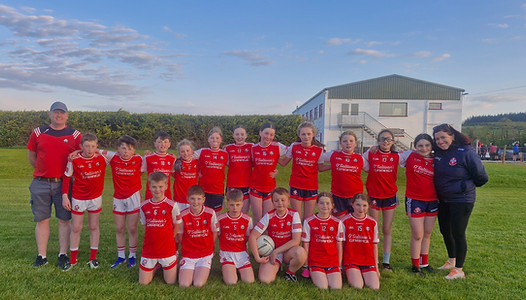
This Coaching workshop with Duhallow GDC Pat Spratt was hosted by Dromtarriffe GAA, Duhallow, North Cork, with their U12 Boys & Girls on 29th April 2026


8-12 year old Players
Will
·Become more physically developed
·Players will develop at different rates and this should be kept in mind during physical training
·Possess a good understanding of the rules and objectives of the game
·Begin to develop tactical awareness
·Begin to balance sport as part of lifestyle and routines

Goals of Phase 1
Players will learn:
·Advanced technical skills
·To use skills under pressure and at speed
·To adhere to tactics/ game strategy
·To play full sided competitive games
·The importance of concentration and better decision making
SKILLS DEVELOPMENT
It offers a comprehensive library of age-appropriate activities tailored to different stages of the GAA Player Development Pathway.

BK Plunketts
Croke Park


Croke Rovers
GAA
ABC (Agility, balance, coordination) Speed development - Relay Races, hurdles, ladders etc
Introduction to flexibility - Age 10+
Base level fitness -
Training games and matches Fun warm ups
THE GAA ACTIVITY PLANNER
-
It offers age-appropriate activities for every stage of the GAA Player Pathway.
-
Activities designed for all ages and development stages in the GAA Player Pathway.
-
A complete set of drills for each phase of the GAA Player Pathway.
Using the GAA Activity Planner
🔍 Key Features
-
Age & Stage Filters: Organize activities by age group (e.g., 4–6 years, 7–9 years, 10–11 years) and development stage (e.g., F1, F2, F3, T1, T2, T3, T4, E1.
-
Skill Categories: Select drills based on specific skills such as sending, receiving, travelling, striking, and maintaining possession.
-
Activity Types: Choose from various formats like full games, small-sided games, conditioned games, fitness exercises, and inclusive activities.
-
Social Distancing Options: Filter for activities that are friendly to social distancing, ensuring safe participation.
🧠 How It Supports Development
The planner aligns with the GAA's Player Pathway, which emphasizes age-appropriate learning and skill progression. By using the planner, coaches can:
-
Design sessions that match the developmental needs of players.
-
Incorporate a variety of drills to keep training engaging and effective.
-
Ensure that activities are inclusive and accessible to all participants.
Credit; learning GAA.ie
📚 Additional Resources
Beyond the Activity Planner,learning.gaa.ie offers a wealth of resources, including:
-
Skill Challenges: Activities aimed at improving specific skills, such as the Go Games Skill Challenges for children aged 7–12. learning.gaa.ie
-
PE Resources: The Céim ar Aghaidh (Step Ahead) program provides lesson plans and activities for primary school teachers to integrate Gaelic games into physical education.
-
Coach Education: Courses like the Introduction to Coaching Gaelic Games (ICGG) Award offer foundational knowledge for new coaches.
Coach Season Planner
Sample

Coach Season Planner
Printable Template


TAP TO
OPEN
Coach Session Planner
Sample

© 2026 The Duhallow Juvenile Clubs GAA Coaching Website & App. All rights reserved.
Coach Season Planner
Printable Template


TAP TO
OPEN
© 2026 The Duhallow Juvenile Clubs GAA Coaching Website & App. All rights reserved.
Go Games
Calendar 2026
.jpg)

Go Games
Rules by Age Category
Credit: Cork GAA
GAA Football Rules for Ages 8–12 (Go Games)

At ages 8–12, Gaelic Football is played under the GAA’s “Go Games” model, which is designed to give every child the opportunity to play, learn and enjoy the sport in a safe, development-focused environment. Go Games emphasises fun, skill development and participation over competition — every player gets to play the full game, and scores and results are not officially recorded in younger age groups. This approach uses appropriately sized teams, modified rules and small-sided games to help players build confidence, improve their skills and foster a lifelong love of Gaelic Football.


GAA Football Rules for Ages 8–12
(Go Games)
🟢 3. No Competitive Elements
Games under 12 years old:
-
Do not have official competitive scores recorded (no official league standings).
-
No titles, knock-outs, finals, or trophies — all players are recognised equally.
-
Certificates can be presented, but the same award for every participant.
This keeps the focus on learning and enjoyment.
4. Equal Playing Time
All children are encouraged to:
-
Get equal game time
-
Rotate positions so they experience different skills and roles
-
Play in supportive, non-intimidating settings
This is core to Go Games philosophy.
🟢 1. Development-centred Focus
-
At ages 8–12, Gaelic Football is played under the Go Games model, which prioritises participation, skill development, fun, and inclusion over competition. Every child should play in every game and get meaningful playing time.
2. Small-sided Games
Game size increases gradually with age:
-
Under-8 & Under-9: smaller games (e.g., ~5v5 to ~6v6)
-
Under-10 to Under-11: medium small-sided games (e.g., ~6v6 to ~8v8)
-
Under-12: larger (e.g., ~11v11), but still development-focused rather than highly competitive
The exact numbers can vary by club or county but follow Go Games recommendations.

🔴
🔴
🟢
🔴 5. Skill-Appropriate Rules
As players get older within the 8–12 range:
-
The standard Gaelic Football rules apply (e.g. catching, soloing, kick passing)
-
Younger players may have modified rules that reduce complexity or physical demands
-
The emphasis is on basic skills, decision-making, teamwork, and fun
Precise adaptations depend on local coaching but always stay within Go Games best practice.
6. Team Size & Pitch
Recommended formats by age (general guide):
-
U8 & U9: small sided (e.g., up to 9 per side)
-
U10 & U11: medium (e.g., ~6–11 per side)
-
U12: larger small sided (~11 per side)
Pitch size and goals should be adapted for age and ability to keep the game flowing.
7. Participation Flexibility
Players may:
-
Play up one age grade if appropriate
-
Clubs should encourage mixed participation where numbers are low
This helps ensure every child gets time on the pitch.
8. Go Games Principles
Throughout ages U8–12, the Go Games approach:
-
Makes sure every child plays and enjoys football
-
Builds skills on both sides of the body
-
Encourages fair play, respect, and inclusion
-
Is designed for skill development over results
🔴
🟢
GAA Hurling Rules for Ages 8–12 (Go Games)
At ages 8–12, hurling is played under the GAA’s Go Games model, which focuses on participation, skill development, and enjoyment rather than winning. As children grow in confidence and ability, the rules gradually become more structured, introducing skills such as lifting, striking from the hand, soloing, and controlled shoulder contact in a safe and supportive environment. Team sizes and pitch dimensions are adapted to suit the players’ age and stage of development, ensuring every child gets meaningful game time while continuing to build their skills and love for hurling.
GAA Hurling Rules for Ages 8–12
(Go Games)
🟢 1. Game Format
-
Games follow the GAA Go Games model: designed to help kids learn skills, have fun, and play as much as possible.
-
Team sizes increase with age — smaller numbers keep children involved and active.
-
Younger players: smaller teams (e.g., 6v6 / 8v8)
-
Older ages (U12): larger small-sided games (e.g., up to ~11v11 depending on numbers)
-
2. Playing Time
-
Every child plays in every game from start to finish, with equal playing time encouraged for all players.
-
Shorter halves or quarters help keep children focused and energetic.
🟢 3. Equipment & Safety
-
All players must wear a helmet with a faceguard — safety is essential in hurling.
-
Use a child-appropriate hurley that fits to the player’s height and skill level.
-
Sliotars should be age-appropriate (First Touch / soft versions in younger age groups).
4. Contact & Physical Play
-
Games are played in a safe, supportive environment focusing on skill, not strength.
-
Younger players focus on ground hurling, catching, and striking from the ground.
-
As ages progress toward 12, lifting the sliotar, striking from the hand, and controlled shoulder-to-shoulder contact are introduced gradually — always with coaching emphasis on correct technique and safety.
-
5. Playing the Ball
-
Encourage ball skills including:
-
Ground striking
-
Lifting the sliotar safely
-
Hand catching
-
Striking from the hand (progressively)
-
The focus is on building confidence and control rather than strict enforcement of full adult rules.
🔴
🔴
🟢


Summary
For ages 8–12, hurling under the Go Games approach means:
-
Smaller teams based on age
-
Fun, skill-centred games
-
Safety first with helmets and appropriate hurleys
-
Equal playing opportunity for every child
-
Minimal emphasis on competition or results
6. Scoring
-
Simple scoring rules apply (goals and points as usual), unless locally agreed otherwise to keep games fun and pressure-free.
-
Many clubs avoid keeping official scores at U8–U11 level so that children aren’t pressured by results.
7. Restarts
-
Sideline pucks and puck-outs follow modified rules so that play restarts quickly and kids keep involved — coaches and referees often guide these in a developmental way.
🔴
🟢


🟢
8. Rotation & Participation
-
Coaches should rotate players through positions so children experience different parts of the game.
-
Substitutions are unlimited and rolling, ensuring no child is sidelined for long.
9. Environment & Culture
-
Play is structured to maximise fun, fair play, friendship, and achievement.
-
Scores, tables, finals, and trophies are not emphasised at U11 and below — the goal is learning and involvement.
10. Coaching Focus
-
Keep instructions positive, simple, and encouraging.
-
Emphasise basic skills first — catching, striking, and decision-making.
-
Allow children to make mistakes and learn through play.
🔴
🔴

